Every rule from your style guide.
Each element of the brief is in the test scene, so you can judge the full look, not a single shot.
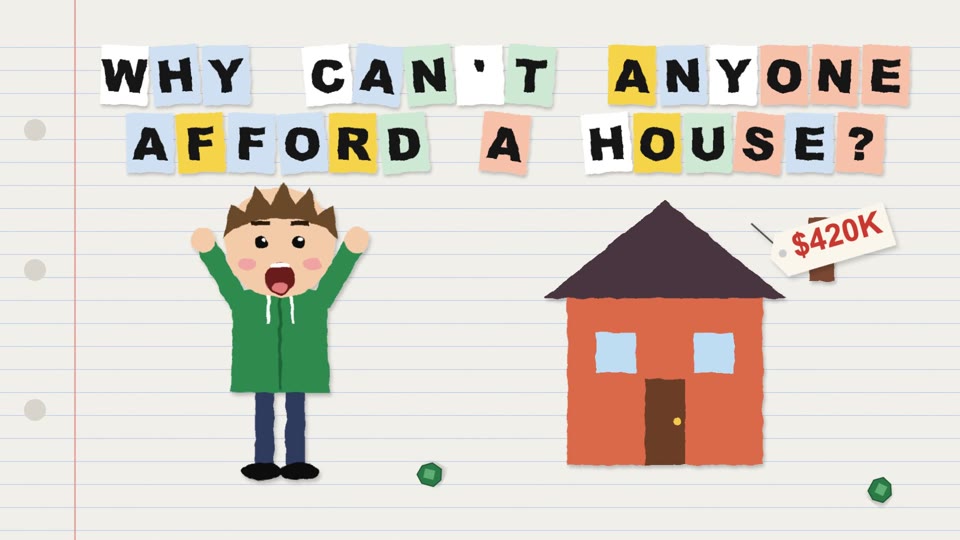 1 · Hook
Ransom-letter question
Cut-out letters land one by one, Alex reacts, the house carries a swinging price tag.
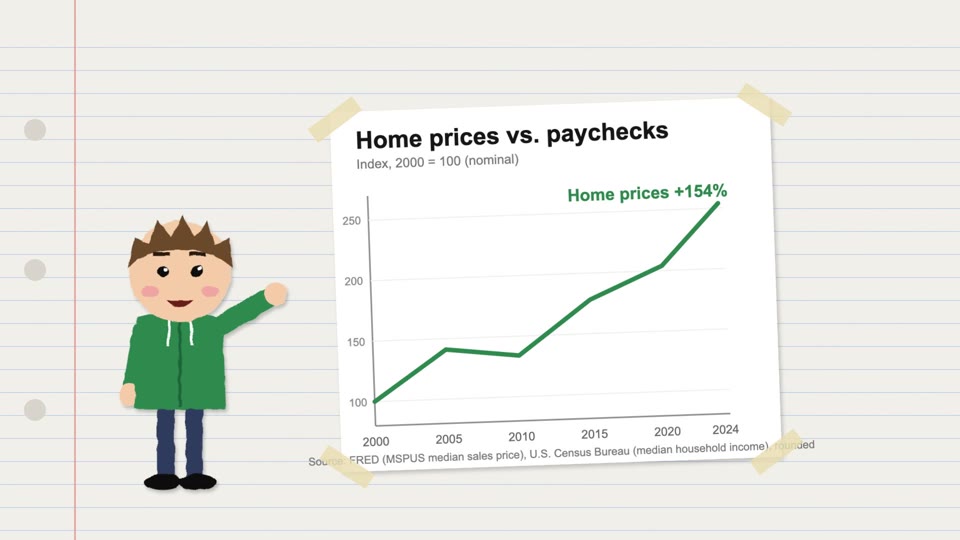 2 · Charts & stats
Printed and taped on
Real data, slight tilt, tape strips, lines that draw in steps, cut-out arrow on the gap, source always visible.
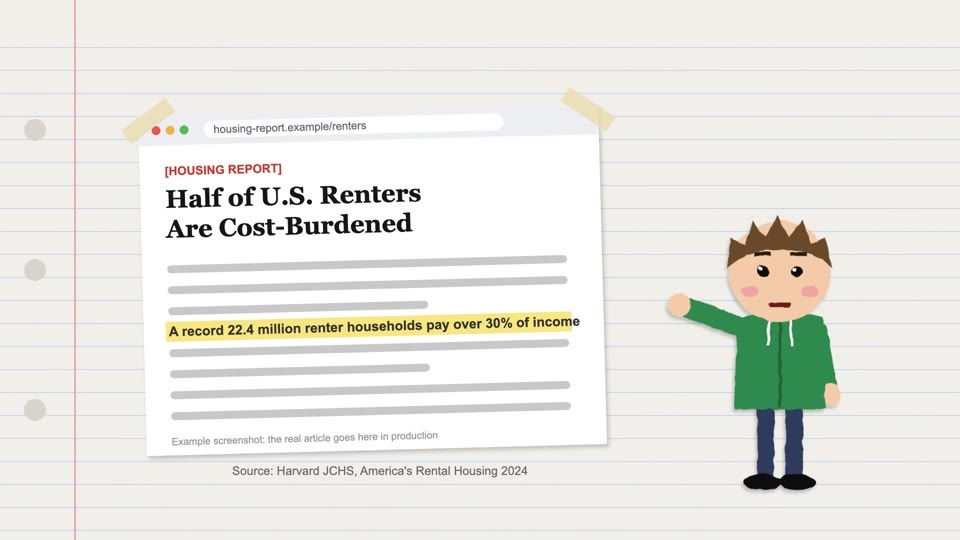 3 · Proof
Highlighter and red marker
Screenshot taped on, highlighter swipe, red marker circle, Alex answers with a speech bubble.
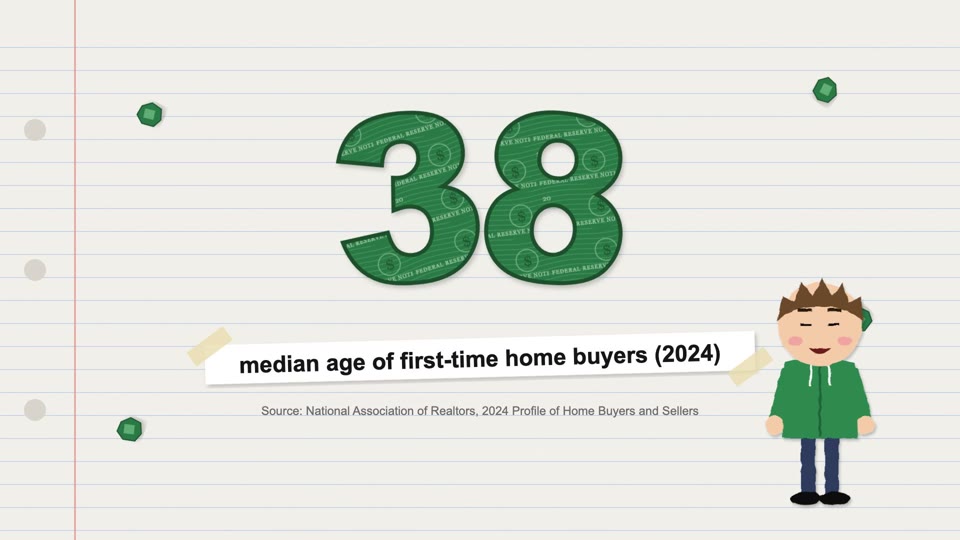 4 · Big number
Money papier-mâché
Key stat in money letters, caption on a taped strip, source line underneath, a rubber stamp for impact.
 Extra
Everything is paper
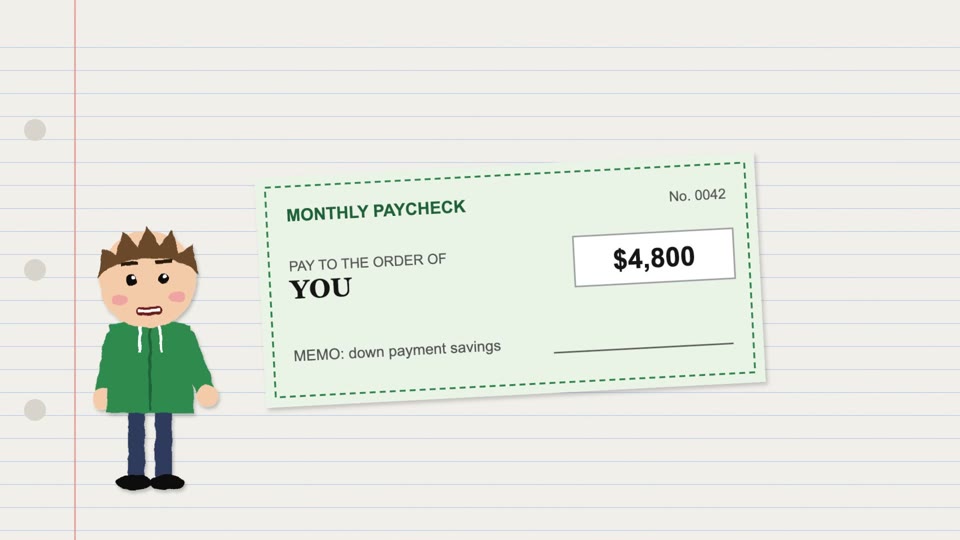
The paycheck catches fire with ember edges, paper flames and ash. A tear-off calendar flips through the years in 3D.
 5 · Transition & end
Crumple, toss, reveal
Scenes crumple into a money ball and get tossed off with a paper crunch. End card with a paper plane.